
Por NuzaBy Nuza
«Las palabras crean mundos.» Rabbi Abraham Joshua Heschel
"Words create worlds." Rabbi Abraham Joshua Heschel
Piensa en la última vez que alguien te dijo algo lindo, y en la última vez que alguien te dijo algo feo. Aunque haya pasado tiempo, algo de esas palabras sigue en tu cuerpo. No se quedan en el aire: dejan huella.
Think about the last time someone said something kind to you, and the last time someone said something hurtful. Even if time has passed, something of those words is still in your body. They don't stay in the air: they leave a mark.
En este artículo vamos a ver qué hacen realmente las palabras —en el mundo y, sobre todo, en ti—, y por qué las que más importan son las que te dices a ti.
In this article we're going to look at what words really do —in the world and, above all, in you—, and why the ones that matter most are the ones you say to yourself.
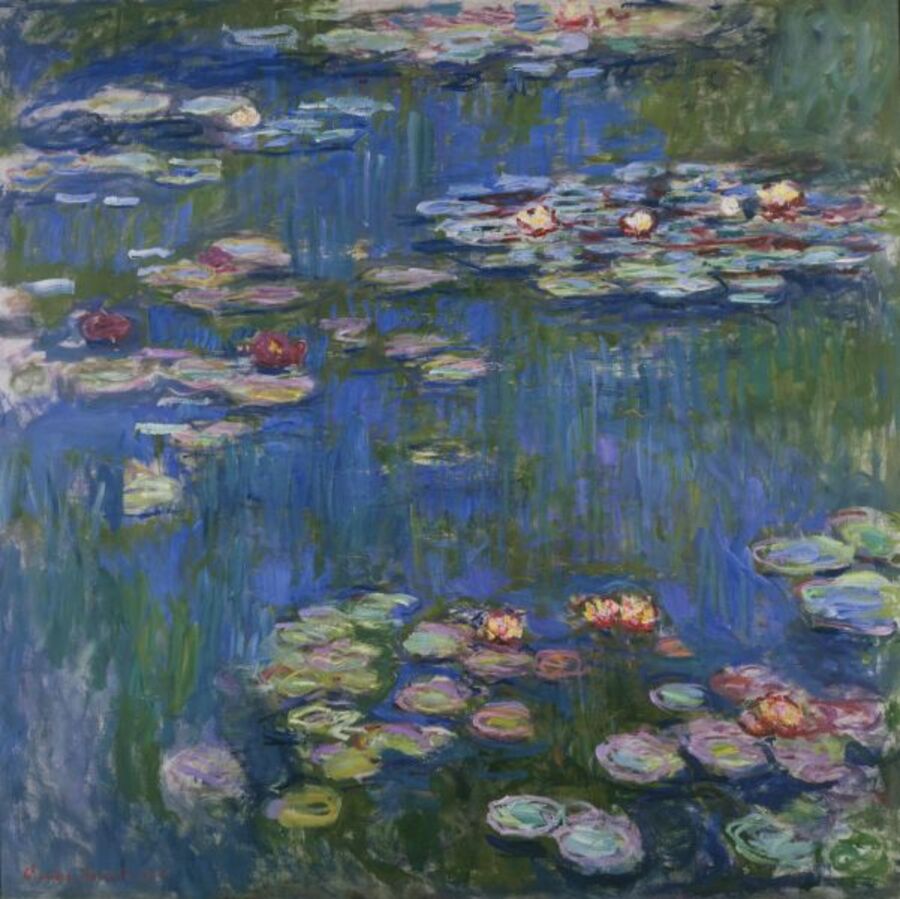
La idea del aguaThe idea of water
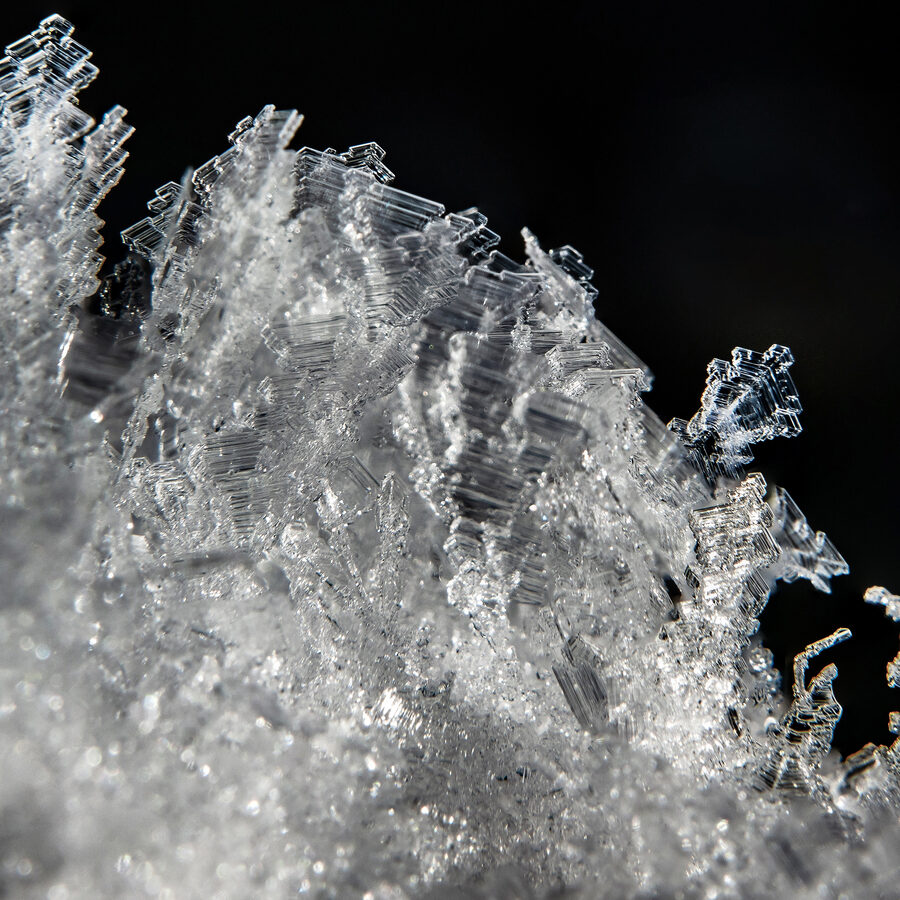
El investigador japonés Masaru Emoto decía que el agua expuesta a palabras bonitas formaba cristales hermosos al congelarse, y que el agua expuesta a palabras feas formaba cristales rotos y caóticos. Sus fotos le dieron la vuelta al mundo y conmovieron a millones de personas.
The Japanese researcher Masaru Emoto claimed that water exposed to beautiful words formed lovely crystals when it froze, and that water exposed to ugly words formed broken, chaotic crystals. His photos traveled around the world and moved millions of people.

La idea se hizo tan popular que mucha gente la probó en casa con arroz: ponen arroz cocido en dos frascos y a uno le dicen cosas bonitas todos los días y al otro cosas feas. Una y otra vez, el frasco que recibe palabras feas se descompone y se llena de moho mucho antes que el otro.
The idea became so popular that many people tried it at home with rice: they put cooked rice in two jars and say kind things to one every day and ugly things to the other. Again and again, the jar that receives ugly words rots and fills with mold long before the other.
Y aquí viene lo que de verdad importa: tu cuerpo es, en su mayoría, agua. Si las palabras pueden influir así en el agua de un frasco, vale la pena detenerse a pensar qué pasa dentro de ti — que eres agua casi por completo. Lo que te dices no se queda en tu mente: viaja por todo tu cuerpo.
And here comes what really matters: your body is, for the most part, water. If words can influence the water in a jar like that, it's worth pausing to think about what happens inside you — who are almost entirely water. What you say to yourself doesn't stay in your mind: it travels through your whole body.
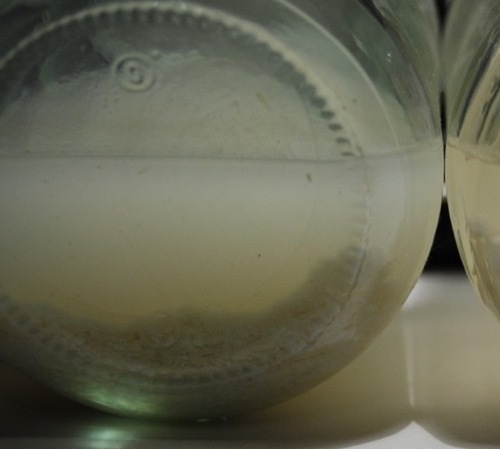
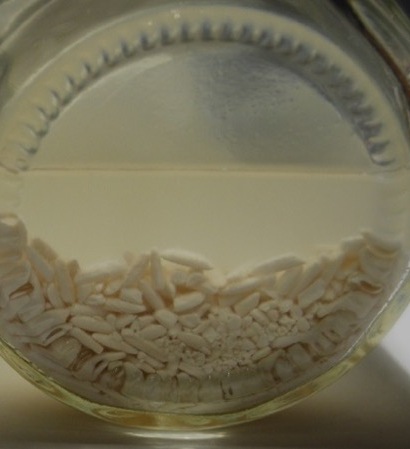
El experimento del arroz, hecho en casa, tras una semana. Foto: Gohnarch (CC BY-SA 3.0), vía Wikimedia Commons.
The rice experiment, done at home, after a week. Photo: Gohnarch (CC BY-SA 3.0), via Wikimedia Commons.
Sus imágenes encendieron una pregunta enorme: ¿pueden las palabras cambiarle la forma a algo vivo? La respuesta es sí — y lo más asombroso es que ese algo eres tú.
His images sparked an enormous question: can words change the shape of something alive? The answer is yes — and the most astonishing part is that that something is you.
Ningún copo de nieve es igual a otroNo two snowflakes are alike
Antes de llegar a ti, mira el mejor ejemplo de la naturaleza. Ningún copo de nieve es igual a otro. Cada uno se forma cayendo por el cielo, y su figura depende por completo del ambiente que atraviesa: la temperatura y la humedad exactas de cada instante van dibujando sus brazos. El mismo tipo de agua, en un ambiente distinto, toma una forma distinta (Libbrecht, Caltech).
Before we get to you, look at nature's best example. No two snowflakes are alike. Each one forms as it falls through the sky, and its shape depends entirely on the environment it passes through: the exact temperature and humidity of each moment draw its arms. The same kind of water, in a different environment, takes a different shape (Libbrecht, Caltech).
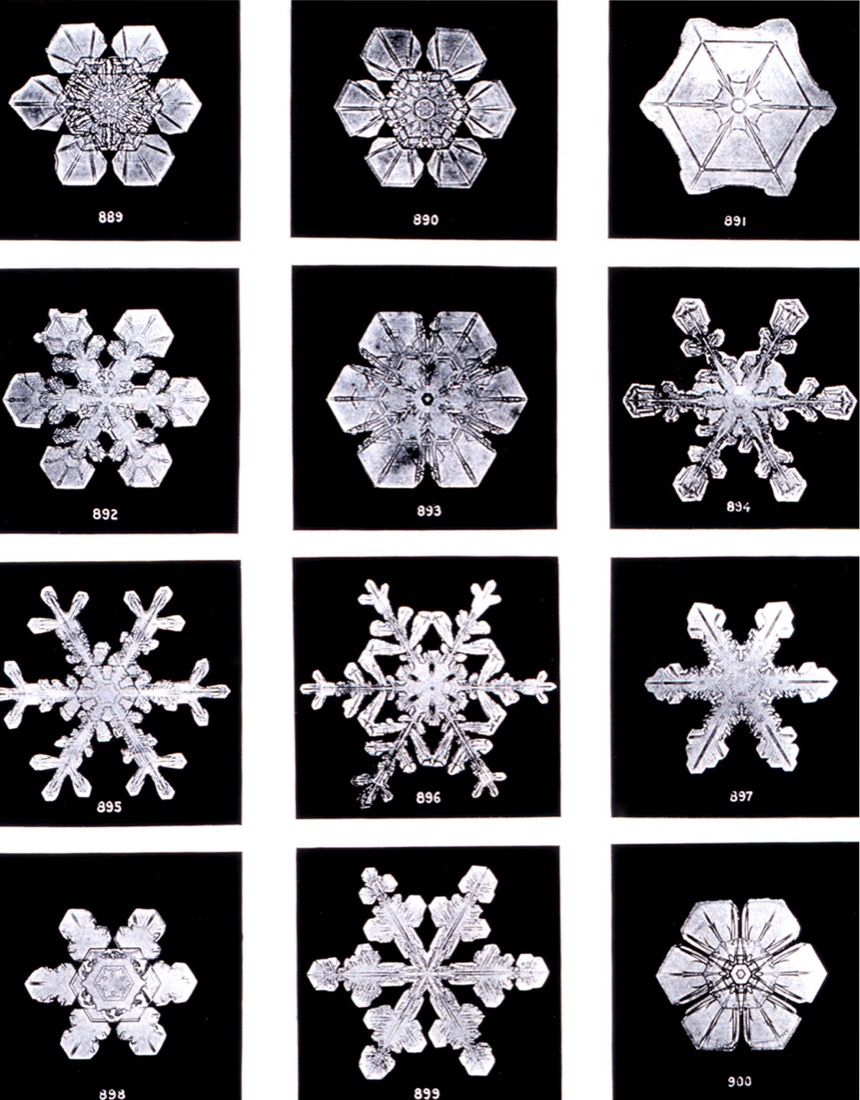
Esto es justo el corazón de la intuición de Emoto: el ambiente le da forma a lo que crece en él. Y aquí viene lo importante: tú vives todo el día dentro de un ambiente hecho de palabras —las que escuchas y, sobre todo, las que te dices— y ese ambiente también te va dando forma.
This is exactly the heart of Emoto's intuition: the environment shapes what grows within it. And here's the important part: you live all day long inside an environment made of words —the ones you hear and, above all, the ones you say to yourself— and that environment shapes you too.
Las palabras te cambian el cuerpoWords change your body
Cuando escuchas o piensas una palabra, tu cerebro no la deja pasar: la interpreta y, según lo que entiende, manda una orden al cuerpo. Una palabra que tu cerebro lee como amenaza dispara las hormonas del estrés —el pulso sube, los músculos se tensan—; una que lee como seguridad hace lo contrario. Esa reacción química es la huella: es física, y ocurre en segundos.
When you hear or think a word, your brain doesn't let it pass: it interprets it and, depending on what it understands, sends an order to the body. A word your brain reads as a threat triggers the stress hormones —the pulse rises, the muscles tense—; one it reads as safety does the opposite. That chemical reaction is the mark: it's physical, and it happens in seconds.
En Stanford, la psicóloga Alia Crum ha demostrado que lo que crees sobre algo cambia lo que tu cuerpo hace con ello. En uno de sus estudios, a un grupo le dieron una malteada presentándola como «indulgente y altísima en calorías» y a otro la misma malteada presentada como «ligera y sensata». El cuerpo del primer grupo produjo una respuesta hormonal de saciedad mucho mayor — con la misma bebida. La palabra cambió la biología (Crum et al., 2011).
At Stanford, the psychologist Alia Crum has shown that what you believe about something changes what your body does with it. In one of her studies, one group was given a milkshake presented as "indulgent and sky-high in calories" and another the same milkshake presented as "light and sensible." The first group's body produced a much greater hormonal satiety response — with the very same drink. The word changed the biology (Crum et al., 2011).
Lo mismo pasa con el dolor y la enfermedad: cuando un médico describe un tratamiento con palabras de confianza, funciona mejor; cuando lo describe con miedo, funciona peor. Es el efecto placebo y su gemelo oscuro, el nocebo: la expectativa, puesta en palabras, se vuelve cuerpo.
The same happens with pain and illness: when a doctor describes a treatment with words of confidence, it works better; when they describe it with fear, it works worse. It's the placebo effect and its dark twin, the nocebo: expectation, put into words, becomes body.
La voz que más te forma es la tuyaThe voice that shapes you most is your own
Y aquí está lo importante. De todas las voces que escuchas en un día, hay una que nunca para: la tuya, hablándote por dentro. Esa voz comenta todo lo que haces, y muchas veces lo hace con una dureza que jamás usarías con alguien que quieres.
And here's the important part. Of all the voices you hear in a day, there's one that never stops: your own, talking to you from the inside. That voice comments on everything you do, and often it does so with a harshness you'd never use with someone you love.
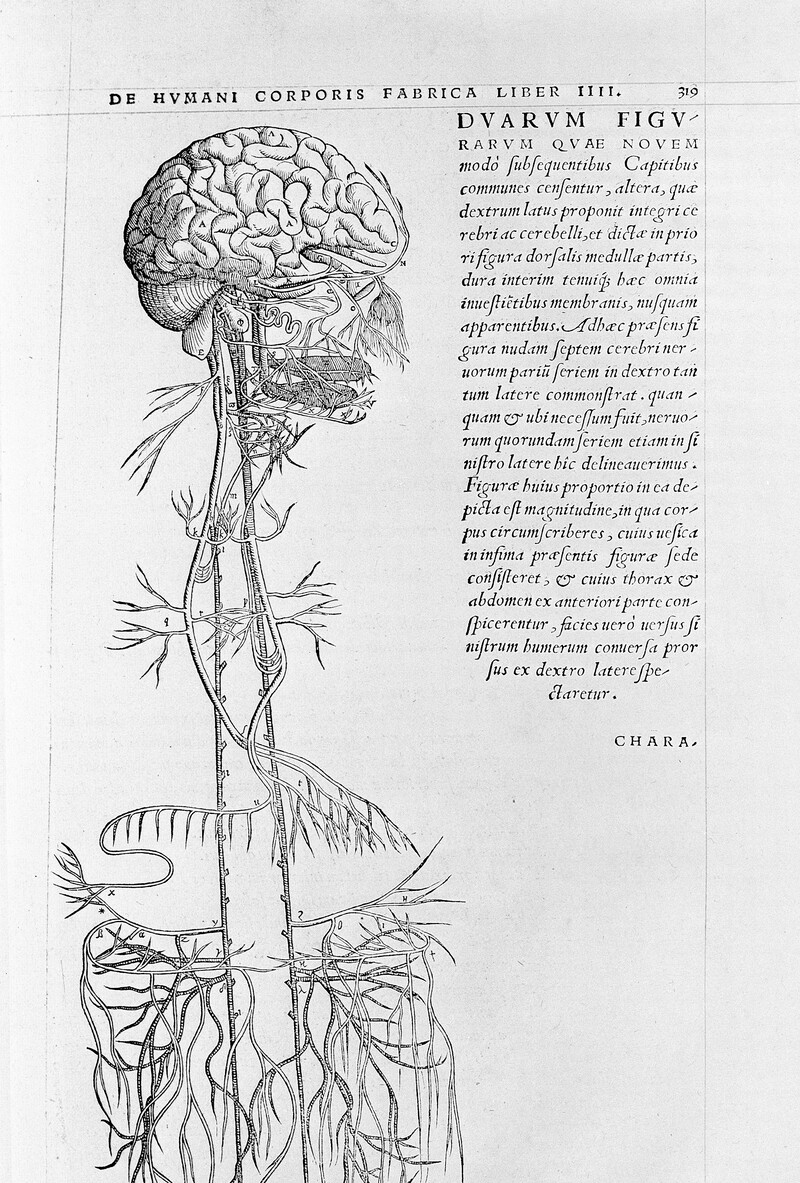
La buena noticia es que esa voz se puede cambiar, y hay un truco muy sencillo que lo demuestra. En la Universidad de Michigan, el investigador Ethan Kross descubrió que cambia mucho si te hablas por tu propio nombre en vez de decir «yo».
The good news is that this voice can be changed, and there's a very simple trick that proves it. At the University of Michigan, the researcher Ethan Kross found that it makes a big difference if you talk to yourself by your own name instead of saying "I."
Por ejemplo, antes de algo que te pone nervioso, en lugar de pensar «no puedo con esto», te dices «tú puedes con esto, (tu nombre)». Suena raro, pero hablarte así —como si le hablaras a otra persona— te ayuda a ver la situación con un poco de distancia, sin que la emoción te arrastre. Y no es solo una sensación: en el cerebro se nota que la reacción emocional baja en menos de un segundo (Kross et al., 2017).
For example, before something that makes you nervous, instead of thinking "I can't handle this," you tell yourself "you've got this, (your name)." It sounds strange, but talking to yourself this way —as if you were speaking to another person— helps you see the situation with a little distance, without the emotion sweeping you away. And it's not just a feeling: in the brain you can see the emotional reaction drop in less than a second (Kross et al., 2017).
Y Kristin Neff, en la Universidad de Texas, ha mostrado a lo largo de veinte años que tratarte con compasión —hablarte como le hablarías a alguien que quieres y está sufriendo— reduce la ansiedad y la depresión, y construye una calma más estable que la de andar persiguiendo autoestima (Neff, 2011). No se trata de mentirte con frases positivas; se trata de dejar de maltratarte.
And Kristin Neff, at the University of Texas, has shown over twenty years that treating yourself with compassion —speaking to yourself as you would to someone you love who is suffering— reduces anxiety and depression, and builds a calm more stable than the kind you get from chasing self-esteem (Neff, 2011). It's not about lying to yourself with positive phrases; it's about no longer mistreating yourself.
Las palabras son sonidoWords are sound
Hay un puente entre todo esto y lo que vimos sobre el sonido: una palabra es sonido con significado. Tiene la vibración —que tu cuerpo siente— y tiene el sentido —que tu mente recibe. Cuando te hablas con dureza, tu sistema de alarma escucha una amenaza y se enciende. Cuando te hablas con calma, escucha seguridad y suelta.
There's a bridge between all of this and what we saw about sound: a word is sound with meaning. It has the vibration —which your body feels— and it has the meaning —which your mind receives. When you speak to yourself harshly, your alarm system hears a threat and switches on. When you speak to yourself calmly, it hears safety and lets go.
El yoga lo supo siempre: por eso existen los mantras, sonidos que se repiten no por superstición, sino porque la repetición de un sonido amable da forma al estado interno. Un mantra es, en el fondo, una palabra elegida a propósito para habitarte.
Yoga always knew this: that's why mantras exist, sounds repeated not out of superstition, but because the repetition of a kind sound shapes the inner state. A mantra is, at heart, a word chosen on purpose to inhabit you.
Para practicar hoyTo practice today
1. Escucha tu voz interna1. Listen to your inner voice
Durante un día, solo nota cómo te hablas por dentro — sin corregir nada todavía. ¿Cómo te dices las cosas cuando te equivocas? Si le hablaras así a alguien que quieres, ¿seguiría a tu lado? Notarlo ya es el primer cambio.
For one day, just notice how you talk to yourself inside — without correcting anything yet. How do you say things to yourself when you make a mistake? If you spoke that way to someone you love, would they stay by your side? Noticing it is already the first change.
2. Háblate por tu nombre2. Talk to yourself by your name
La próxima vez que estés con los nervios de punta o a punto de algo difícil, háblate por tu nombre, como quien anima a alguien que quiere: «respira, lo tienes». Esa pequeña distancia, comprobada en laboratorio, te baja la intensidad de la emoción.
The next time your nerves are on edge or you're about to face something hard, talk to yourself by your name, the way you'd encourage someone you love: "breathe, you've got this." That small distance, proven in the lab, lowers the intensity of the emotion.
3. Un mantra propio3. A mantra of your own
Elige una frase corta y amable, y repítela en silencio al ritmo de tu respiración: una parte al inhalar, otra al exhalar. Puede ser «estoy aquí, estoy a salvo». No es magia — es entrenar a tu voz interna para que trabaje a tu favor.
Choose a short, kind phrase, and repeat it silently to the rhythm of your breath: one part on the inhale, another on the exhale. It could be "I'm here, I'm safe." It's not magic — it's training your inner voice to work in your favor.
No hace falta creer que las palabras reordenan el agua. Basta con saber que te reordenan a ti. Eres el copo de nieve que se forma en el ambiente de tus propias palabras — así que elígelas como elegirías el aire que respiras.
You don't have to believe that words rearrange water. It's enough to know that they rearrange you. You are the snowflake that forms in the environment of your own words — so choose them as you would choose the air you breathe.
ReferenciasReferences
- Crum, A. J., Corbin, W. R., Brownell, K. D. y Salovey, P. (2011). Mind over milkshakes: mindsets, not just nutrients, determine ghrelin response. Health Psychology, 30(4), 424–429. (Stanford / Yale.)
- Kross, E., Bruehlman-Senecal, E., Park, J. et al. (2014). Self-talk as a regulatory mechanism: how you do it matters. Journal of Personality and Social Psychology, 106(2), 304–324. (University of Michigan.)
- Moser, J. S., Dougherty, A., Mattson, W. I. … Kross, E. (2017). Third-person self-talk facilitates emotion regulation without engaging cognitive control: converging evidence from ERP and fMRI. Scientific Reports, 7, 4519.
- Neff, K. (2011). Self-Compassion: The Proven Power of Being Kind to Yourself. William Morrow. (University of Texas at Austin.)
- Libbrecht, K. G. (2005). The physics of snow crystals. Reports on Progress in Physics, 68, 855–895. (California Institute of Technology — Caltech.)
- Bentley, W. A. y Humphreys, W. J. (1931). Snow Crystals. McGraw-Hill. (Fuente de las fotografías históricas de copos de nieve.)(Source of the historical snowflake photographs.)
- Sobre los experimentos de cristales de agua: Emoto, M. (2004). The Hidden Messages in Water. (Idea de amplia difusión; no validada bajo condiciones científicas controladas — ver crítica metodológica en la revisión de su trabajo.)On the water-crystal experiments: Emoto, M. (2004). The Hidden Messages in Water. (A widely circulated idea; not validated under controlled scientific conditions — see the methodological critique in reviews of his work.)
Créditos de imágenes: Cristal de hielo armonioso: Alexey Kljatov (CC BY-SA 4.0). Cristales de hielo caóticos (escarcha): W. Carter (CC BY-SA 4.0). Experimento del arroz: Gohnarch (CC BY-SA 3.0). Lámina de copos de nieve: Wilson Bentley (c. 1902), dominio público. Grabado del cerebro: Andrés Vesalio (1543), vía Wellcome Collection. Vía Wikimedia Commons / Wellcome Collection.
Image credits: Harmonious ice crystal: Alexey Kljatov (CC BY-SA 4.0). Chaotic ice crystals (frost): W. Carter (CC BY-SA 4.0). Rice experiment: Gohnarch (CC BY-SA 3.0). Snowflake plate: Wilson Bentley (c. 1902), public domain. Brain engraving: Andreas Vesalius (1543), via Wellcome Collection. Via Wikimedia Commons / Wellcome Collection.