Por NuzaBy Nuza
«Savasana es la más difícil de perfeccionar de todas las posturas — y también la más reparadora.» B.K.S. Iyengar, Luz sobre el Prāṇāyāma (1981)
"Savasana is the most difficult of all postures to perfect — and also the most restorative." B.K.S. Iyengar, Light on Prāṇāyāma (1981)
Al final de casi toda clase de yoga llega un momento que parece que no es nada: te acuestas, cierras los ojos y te quedas quieto unos minutos. Por fuera no pasa gran cosa, y es fácil tomarlo como un simple cierre antes de irte. Pero esa postura tiene nombre, tiene siglos, y muchos maestros la consideran la más importante de todas.
At the end of almost every yoga class there comes a moment that seems like nothing: you lie down, close your eyes and stay still for a few minutes. On the outside not much happens, and it's easy to take it as a simple wind-down before you leave. But that posture has a name, it has centuries behind it, and many teachers consider it the most important of all.
Se llama savasana, y en este artículo vamos a ver qué es, por qué importa tanto y por qué —aunque parezca la más fácil— es en realidad la más difícil de dominar.
It's called savasana, and in this article we'll look at what it is, why it matters so much and why — though it seems the easiest — it's actually the hardest to master.
La postura del cadáverThe corpse posture
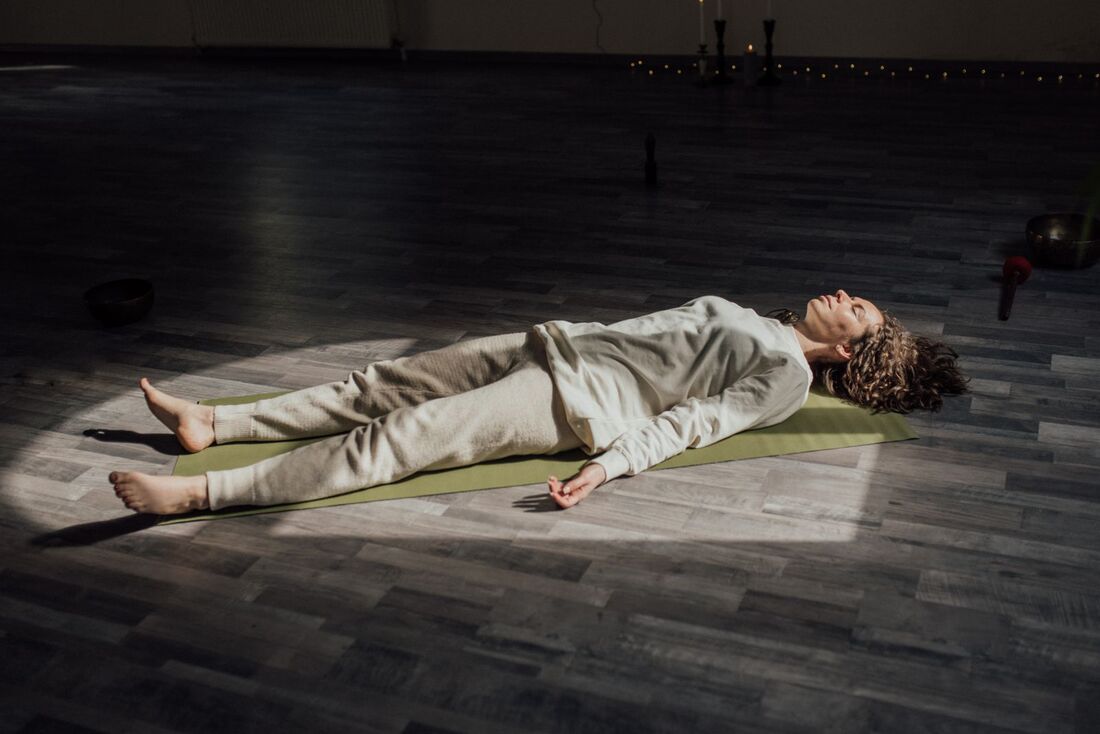
Savasana viene del sánscrito śava (cadáver) y āsana (postura): la «postura del cadáver». El nombre suena fuerte, pero es exacto. Se trata de acostarte boca arriba, completamente quieto, soltando todo el peso del cuerpo al suelo, como si por unos minutos dejaras de sostenerte. No hay nada que lograr, nada que estirar, ningún esfuerzo. Solo soltar.
Savasana comes from the Sanskrit śava (corpse) and āsana (posture): the "corpse posture." The name sounds harsh, but it's precise. It means lying on your back, completely still, releasing all the weight of the body into the floor, as if for a few minutes you stopped holding yourself up. There's nothing to achieve, nothing to stretch, no effort. Just letting go.
Por qué es la más importanteWhy it's the most important
La razón tiene que ver con una palabra: integración. Durante una clase mueves el cuerpo, cambias la respiración, activas el sistema nervioso. Savasana es el momento en que todo eso se asienta. Es como cuando agitas un frasco con agua y tierra: solo cuando lo dejas quieto, el agua se aclara. El cuerpo necesita esa quietud para absorber lo que acabas de hacer.
The reason has to do with one word: integration. During a class you move the body, change the breath, activate the nervous system. Savasana is the moment when all of that settles. It's like when you shake a jar with water and dirt: only when you let it sit does the water clear. The body needs that stillness to absorb what you just did.
Si te saltas savasana, te pierdes justo la parte donde la práctica «cuaja». Como dice el maestro T.K.V. Desikachar, el descanso al final no es un añadido: es lo que permite que el cuerpo asimile el trabajo y vuelva al equilibrio (El corazón del yoga, 1995).
If you skip savasana, you miss exactly the part where the practice "sets." As the teacher T.K.V. Desikachar says, the rest at the end is not an add-on: it's what allows the body to absorb the work and return to balance (The Heart of Yoga, 1995).
Lo que pasa en tu cuerpoWhat happens in your body
Si has leído sobre la respiración y el sistema nervioso, ya conoces al sistema nervioso autónomo, con su acelerador (el estrés) y su freno (la calma). Savasana es una de las formas más directas de pisar el freno.
If you've read about the breath and the nervous system, you already know the autonomic nervous system, with its accelerator (stress) and its brake (calm). Savasana is one of the most direct ways to press the brake.
En los años setenta, el cardiólogo de Harvard Herbert Benson estudió qué pasa en el cuerpo cuando una persona se relaja profundamente y le puso un nombre: la respuesta de relajación. Descubrió que baja la presión arterial, se hace más lento el pulso, la respiración se calma y el consumo de oxígeno disminuye. Es lo opuesto exacto al estado de estrés (Benson, The Relaxation Response, 1975). Acostarte en savasana, con el cuerpo inmóvil y la respiración suave, es una de las maneras más sencillas de provocar justo esa respuesta.
In the 1970s, the Harvard cardiologist Herbert Benson studied what happens in the body when a person relaxes deeply and gave it a name: the relaxation response. He found that blood pressure drops, the pulse slows, breathing calms and oxygen consumption falls. It's the exact opposite of the stress state (Benson, The Relaxation Response, 1975). Lying in savasana, with the body still and the breath soft, is one of the simplest ways to bring about exactly that response.
La postura más difícilThe hardest posture
Aquí está la paradoja. B.K.S. Iyengar, uno de los maestros más importantes del siglo XX, decía que savasana es la más difícil de todas las posturas. En su libro Luz sobre el Prāṇāyāma le dedicó más páginas que a cualquier otra (Iyengar, 1981).
Here's the paradox. B.K.S. Iyengar, one of the most important teachers of the twentieth century, said that savasana is the hardest of all the postures. In his book Light on Prāṇāyāma he devoted more pages to it than to any other (Iyengar, 1981).
¿Por qué difícil, si solo es acostarse? Porque estar quieto por fuera es fácil; estar quieto por dentro no lo es. En cuanto el cuerpo se detiene, la mente empieza: la lista de pendientes, lo que dijiste, lo que falta. Savasana no es dormir ni desconectarte — es quedarte despierto y presente mientras todo lo demás se suelta. Eso es lo que cuesta, y eso es exactamente lo que se entrena.
Why hard, if it's just lying down? Because being still on the outside is easy; being still on the inside is not. The moment the body stops, the mind starts: the to-do list, what you said, what's still pending. Savasana is not sleeping nor checking out — it's staying awake and present while everything else lets go. That's what's difficult, and that's exactly what's being trained.
El descanso que el yoga siempre honróThe rest that yoga has always honored
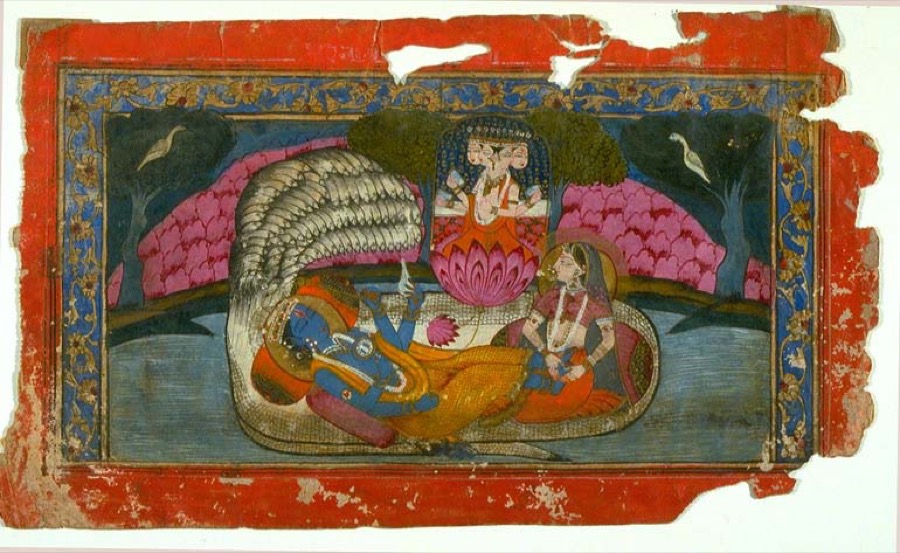
Esta quietud consciente tiene raíces muy antiguas. En la mitología del yoga, el universo descansa en la figura de Vishnu, recostado sobre una serpiente cósmica entre dos ciclos del mundo: ni dormido ni despierto, en un reposo del que todo vuelve a nacer.
This conscious stillness has very ancient roots. In the mythology of yoga, the universe rests in the figure of Vishnu, reclining on a cosmic serpent between two cycles of the world: neither asleep nor awake, in a repose from which everything is born again.
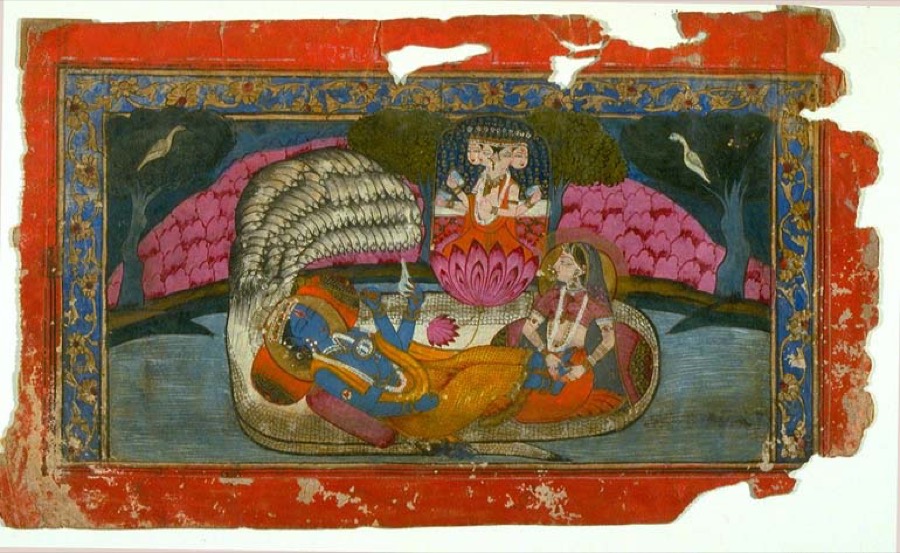
De esa misma raíz nace el yoga nidra, el «sueño yóguico»: una práctica de relajación profunda que se hace, justamente, en savasana. Acostarte al final de la clase es entrar, aunque sea un momento, en ese descanso del que se sale renovado.
From that same root comes yoga nidra, the "yogic sleep": a practice of deep relaxation that is done, precisely, in savasana. Lying down at the end of class is entering, even for a moment, into that rest from which you come out renewed.
Cómo hacer savasanaHow to do savasana
La postura, paso a pasoThe posture, step by step
Acuéstate boca arriba. Separa un poco los pies y deja que caigan solos hacia afuera. Pon los brazos un poco alejados del cuerpo, con las palmas hacia arriba. Si la espalda baja te molesta, pon un cojín bajo las rodillas. Cierra los ojos.
Lie on your back. Let your feet fall apart and roll open on their own. Place your arms a little away from the body, palms facing up. If your lower back bothers you, put a cushion under your knees. Close your eyes.
Suelta el peso de cada parte: la cabeza, los hombros, las manos, las piernas. Deja que el suelo te sostenga por completo. No controles la respiración; solo obsérvala. Si la mente se va, vuelve al cuerpo y al aire que entra y sale. Quédate de cinco a diez minutos.
Release the weight of each part: the head, the shoulders, the hands, the legs. Let the floor hold you completely. Don't control the breath; just watch it. If the mind wanders off, come back to the body and to the air moving in and out. Stay for five to ten minutes.
Para salir, no te levantes de golpe: mueve primero los dedos de las manos y los pies, gírate de lado un momento, y sube despacio. El cuidado al salir es parte de la postura.
To come out, don't get up suddenly: first wiggle your fingers and toes, roll onto your side for a moment, and come up slowly. The care in coming out is part of the posture.
Las posturas fuertes son las que más llaman la atención. Pero savasana es la que de verdad cierra el círculo: el momento en que dejas de hacer para por fin recibir. Por eso es la más importante — y por eso, casi siempre, es la que más falta nos hace.
The strong postures are the ones that draw the most attention. But savasana is the one that truly closes the circle: the moment when you stop doing so you can finally receive. That's why it's the most important — and why, almost always, it's the one we need the most.
ReferenciasReferences
- Iyengar, B. K. S. (1966). Light on Yoga (Luz sobre el Yoga). George Allen & Unwin. (Capítulo sobre savasana.)
- Iyengar, B. K. S. (1981). Light on Prāṇāyāma (Luz sobre el Prāṇāyāma). HarperCollins. (Dedica a savasana más páginas que a cualquier otra postura.)
- Benson, H. y Klipper, M. Z. (1975). The Relaxation Response. Harvard / William Morrow. (Cardiólogo de Harvard; describe la respuesta de relajación.)
- Benson, H. et al. (1974). The relaxation response. Psychiatry, 37(1), 37–46.
- Saraswati, S. S. (1976). Yoga Nidra. Bihar School of Yoga. (Sobre el sueño yóguico practicado en savasana.)
- Desikachar, T. K. V. (1995). The Heart of Yoga. Inner Traditions. (Sobre el descanso y la integración en la práctica.)
Créditos de imágenes: Fotografía de savasana: vía Pexels (uso libre). Miniatura de Vishnu sobre la serpiente cósmica: dominio público. Vía Wikimedia Commons.
Image credits: Photograph of savasana: via Pexels (free use). Miniature of Vishnu on the cosmic serpent: public domain. Via Wikimedia Commons.