
Por NuzaBy Nuza
«El yoga es el aquietamiento de las fluctuaciones de la mente.»"Yoga is the stilling of the fluctuations of the mind." Patañjali, Yoga Sūtras, 1.2 (trad. Edwin Bryant, 2009)Patañjali, Yoga Sūtras, 1.2 (trans. Edwin Bryant, 2009)
Cuando pensamos en yoga, lo primero que viene a la mente suelen ser las posturas. Pero en el texto que definió el yoga hace casi dos mil años, las posturas son solo una de ocho partes — y ni siquiera la más importante.
When we think of yoga, the first thing that comes to mind is usually the postures. But in the text that defined yoga almost two thousand years ago, the postures are only one of eight parts — and not even the most important one.
En este artículo vamos a ver el mapa completo: cuáles son las ocho ramas del yoga, qué es cada una y cómo se ven en la vida real.
In this article we'll look at the whole map: what the eight limbs of yoga are, what each one is, and how they show up in real life.
Un manual de hace dos mil añosA manual from two thousand years ago
Entre los siglos II y IV, un sabio llamado Patañjali reunió el conocimiento del yoga de su época en 195 frases muy cortas llamadas sūtras, que significa «hilos». Ese texto, los Yoga Sūtras, sigue siendo el manual de referencia del yoga hasta hoy (Bryant, 2009; Feuerstein, 1998).
Sometime between the second and fourth centuries, a sage named Patañjali gathered the yoga knowledge of his time into 195 very short phrases called sūtras, which means "threads." That text, the Yoga Sūtras, is still the reference manual of yoga today (Bryant, 2009; Feuerstein, 1998).
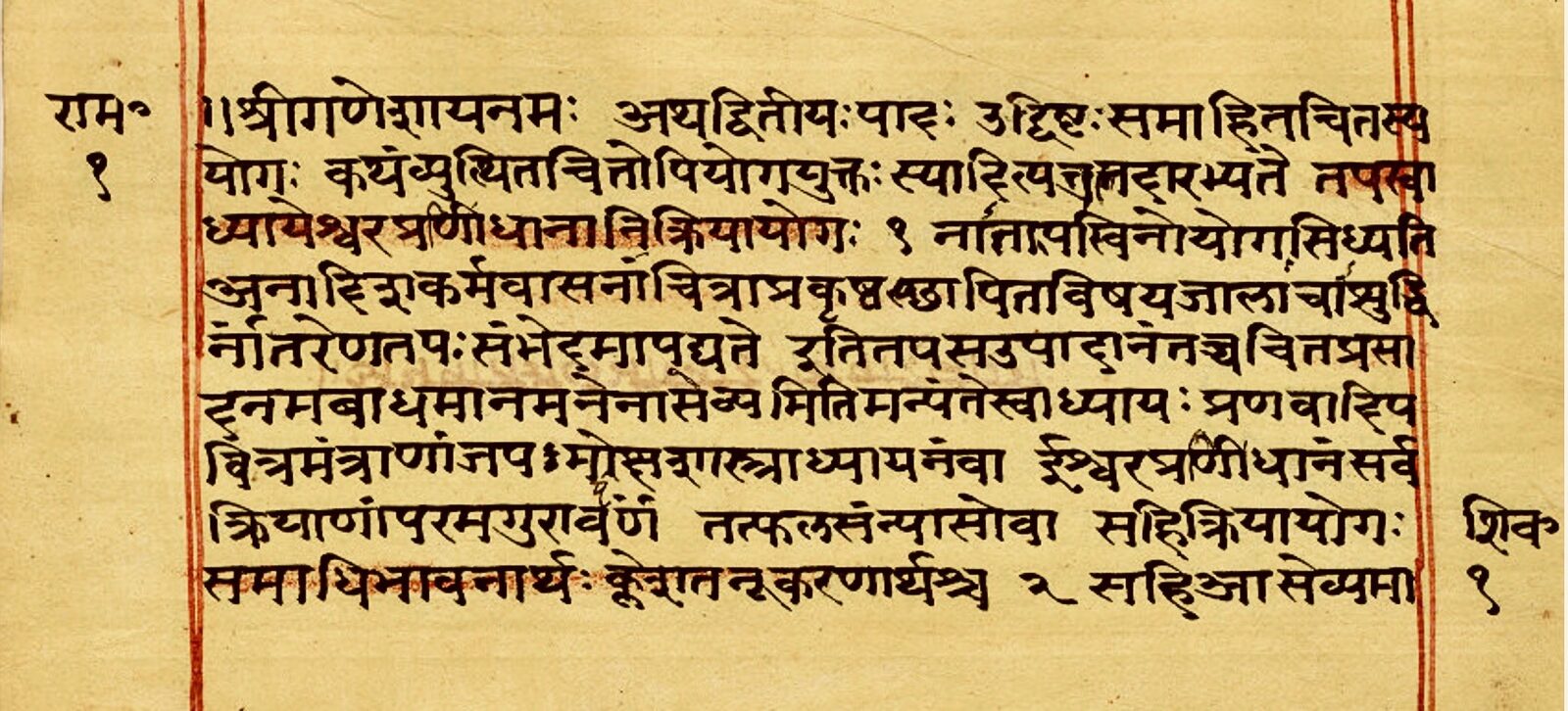
En la segunda parte del texto, Patañjali describe el camino del yoga en ocho partes. Lo llama aṣṭāṅga: aṣṭa significa ocho y aṅga significa rama o miembro, como los miembros de un cuerpo (Yoga Sūtras, 2.29). De ahí viene también el nombre del estilo ashtanga que se practica hoy en los estudios.
In the second part of the text, Patañjali describes the path of yoga in eight parts. He calls it aṣṭāṅga: aṣṭa means eight and aṅga means limb or branch, like the limbs of a body (Yoga Sūtras, 2.29). That's also where the name of the ashtanga style practiced in studios today comes from.
El mapa completoThe complete map
Las ocho ramas son:
The eight limbs are:
- Yama — cómo tratas al mundoYama — how you treat the world
- Niyama — cómo te tratas a tiNiyama — how you treat yourself
- Āsana — la posturaĀsana — the posture
- Prāṇāyāma — la respiraciónPrāṇāyāma — the breath
- Pratyāhāra — desconectar de lo de afueraPratyāhāra — turning away from the outside
- Dhāraṇā — la concentraciónDhāraṇā — concentration
- Dhyāna — la meditaciónDhyāna — meditation
- Samādhi — la absorción totalSamādhi — complete absorption
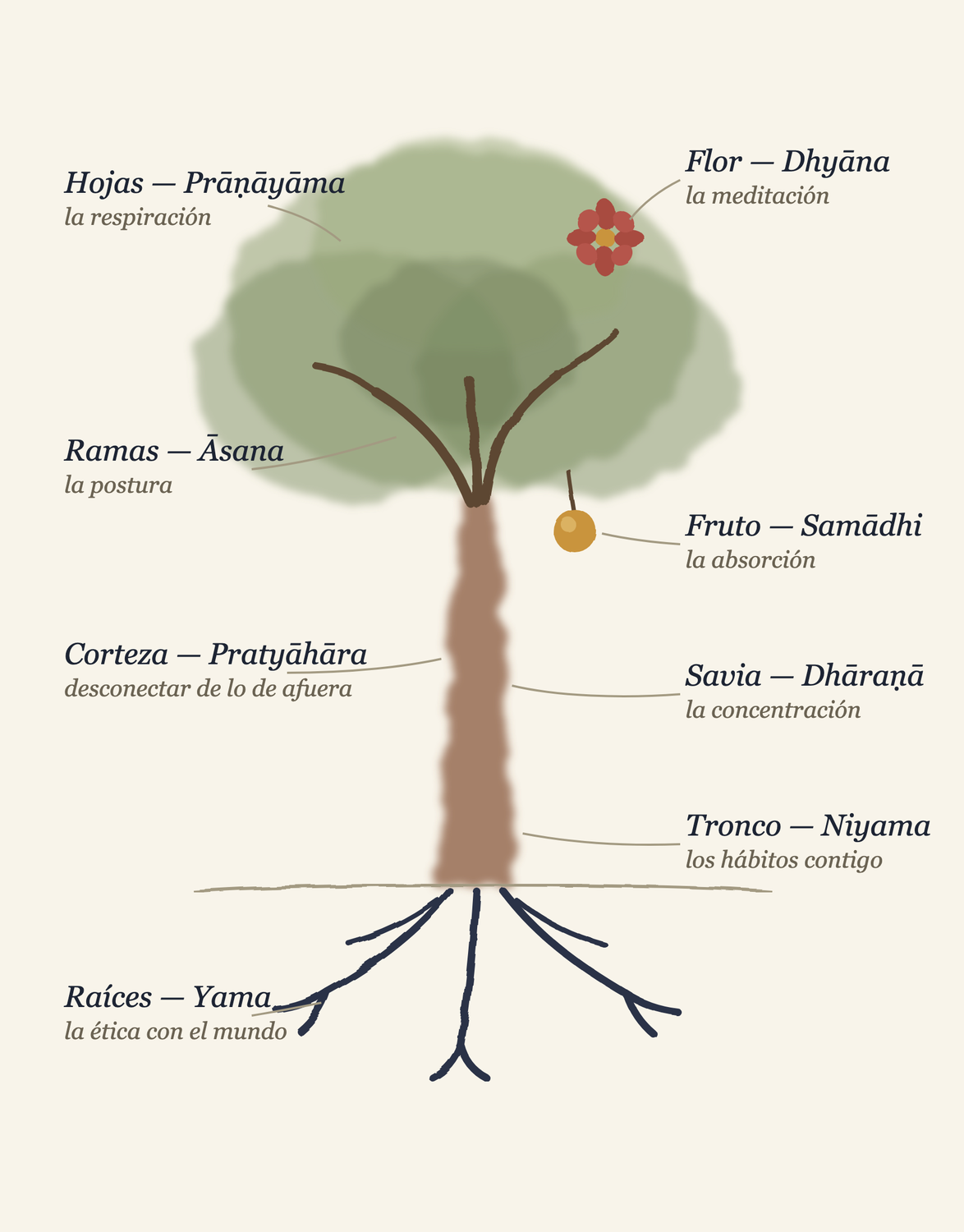
B.K.S. Iyengar, uno de los maestros más influyentes del siglo XX, las explicó con la imagen de un árbol (El árbol del yoga, 1988): los yamas son las raíces, los niyamas el tronco, las āsanas las ramas, el prāṇāyāma las hojas, el pratyāhāra la corteza, la dhāraṇā la savia, el dhyāna la flor y el samādhi el fruto. Ninguna parte sobra: un árbol sin raíces se cae, y un árbol sin hojas no respira.
B.K.S. Iyengar, one of the most influential teachers of the twentieth century, explained them with the image of a tree (The Tree of Yoga, 1988): the yamas are the roots, the niyamas the trunk, the āsanas the branches, prāṇāyāma the leaves, pratyāhāra the bark, dhāraṇā the sap, dhyāna the flower, and samādhi the fruit. No part is spare: a tree without roots falls over, and a tree without leaves can't breathe.
Las raíces: cómo tratas al mundo (yama)The roots: how you treat the world (yama)
Los yamas son cinco acuerdos éticos con todo lo que te rodea (Yoga Sūtras, 2.30):
The yamas are five ethical agreements with everything around you (Yoga Sūtras, 2.30):
- Ahiṃsā — no dañar: a otros, a ti, con actos o con palabras.Ahiṃsā — not harming: others, yourself, in action or in words.
- Satya — decir la verdad y vivir sin fingir.Satya — telling the truth and living without pretending.
- Asteya — no tomar lo que no es tuyo: cosas, tiempo, crédito ajeno.Asteya — not taking what isn't yours: things, time, someone else's credit.
- Brahmacarya — usar tu energía con inteligencia, sin desperdiciarla.Brahmacarya — using your energy wisely, without wasting it.
- Aparigraha — no acumular: soltar lo que ya no necesitas.Aparigraha — not hoarding: letting go of what you no longer need.
Deborah Adele (The Yamas & Niyamas, 2009) los describe como prácticas y no como mandamientos: no son reglas para ser «buena persona», son experimentos para vivir con menos fricción.
Deborah Adele (The Yamas & Niyamas, 2009) describes them as practices, not commandments: they aren't rules for being a "good person," they're experiments in living with less friction.
El tronco: cómo te tratas a ti (niyama)The trunk: how you treat yourself (niyama)
Los niyamas son cinco hábitos hacia adentro (Yoga Sūtras, 2.32):
The niyamas are five habits turned inward (Yoga Sūtras, 2.32):
- Śauca — limpieza: del cuerpo, de tus espacios, de lo que consumes.Śauca — cleanliness: of the body, your spaces, what you take in.
- Santoṣa — contentamiento: estar en paz con lo que hay hoy.Santoṣa — contentment: being at peace with what's here today.
- Tapas — disciplina: el calor que se genera al sostener el esfuerzo.Tapas — discipline: the heat that builds when you stay with the effort.
- Svādhyāya — autoestudio: observarte con honestidad y estudiar lo que te nutre.Svādhyāya — self-study: watching yourself honestly and studying what nourishes you.
- Īśvarapraṇidhāna — soltar el control: confiar en algo más grande que tú.Īśvarapraṇidhāna — letting go of control: trusting something greater than you.
Sobre santoṣa, Swami Satchidananda (1978) lo resume en una idea simple: la felicidad no depende de lo que pasa, sino de cómo lo recibes.
On santoṣa, Swami Satchidananda (1978) sums it up in a simple idea: happiness doesn't depend on what happens, but on how you receive it.
Las ramas y las hojas: el cuerpo y la respiración (āsana y prāṇāyāma)The branches and the leaves: the body and the breath (āsana and prāṇāyāma)
Aquí vive casi todo el yoga moderno. Y aquí viene un dato que sorprende: de los 195 sūtras, Patañjali le dedica a la postura solo tres. Su definición completa es esta: «La postura debe ser estable y cómoda» (sthira-sukham āsanam, Yoga Sūtras, 2.46). No habla de flexibilidad ni de formas perfectas. Habla de estabilidad y comodidad: un cuerpo que puede quedarse quieto sin sufrir, para que la mente pueda trabajar.
This is where almost all of modern yoga lives. And here comes a fact that surprises people: of the 195 sūtras, Patañjali gives the posture only three. His full definition is this: "The posture should be steady and comfortable" (sthira-sukham āsanam, Yoga Sūtras, 2.46). He doesn't talk about flexibility or perfect shapes. He talks about steadiness and ease: a body that can stay still without suffering, so the mind can do its work.
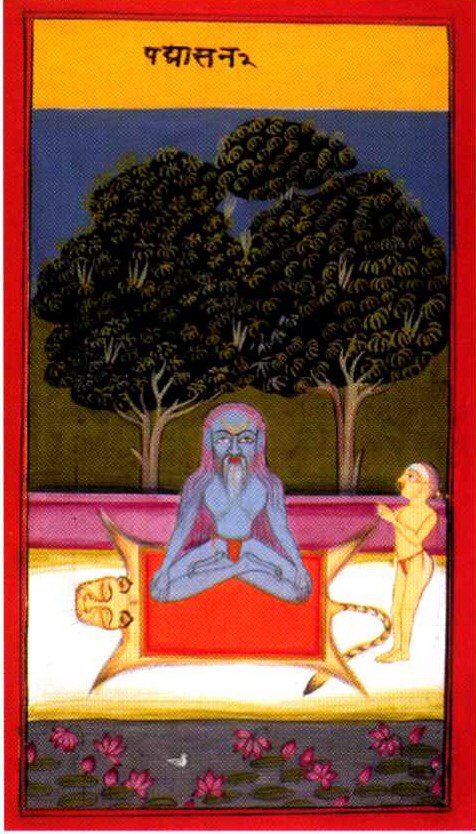
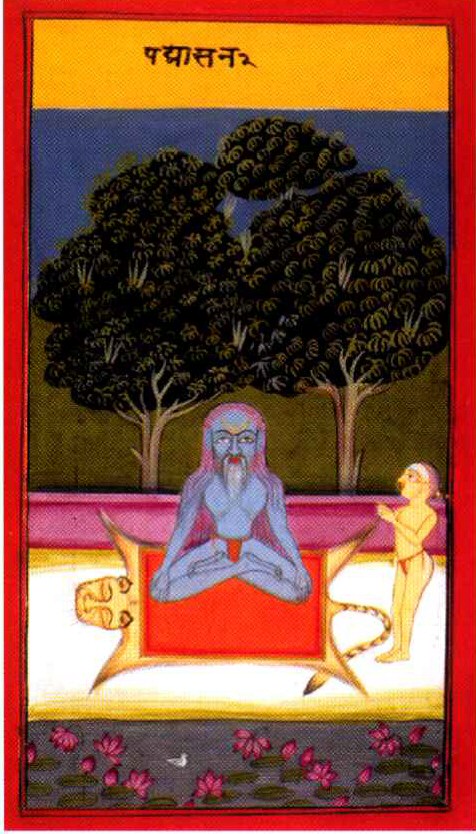
Las decenas de posturas que conocemos hoy florecieron después, en la tradición del haṭha yoga: la Haṭha Yoga Pradīpikā (siglo XV) describe quince, y manuscritos posteriores como la Jogapradīpikā (1830) ya ilustraban ochenta y cuatro.
The dozens of postures we know today flourished later, in the haṭha yoga tradition: the Haṭha Yoga Pradīpikā (fifteenth century) describes fifteen, and later manuscripts like the Jogapradīpikā (1830) already illustrated eighty-four.
El prāṇāyāma es la regulación de la respiración: alargarla, suavizarla, sostenerla. Patañjali lo describe como el paso que prepara la mente para concentrarse (Yoga Sūtras, 2.49–2.53). De esta rama hablamos a fondo en La respiración: la puerta de entrada al sistema nervioso.
Prāṇāyāma is the regulation of the breath: lengthening it, softening it, holding it. Patañjali describes it as the step that prepares the mind to concentrate (Yoga Sūtras, 2.49–2.53). We go into this limb in depth in The breath: the doorway into the nervous system.
La corteza: desconectar de lo de afuera (pratyāhāra)The bark: turning away from the outside (pratyāhāra)
Todo el día, tus sentidos apuntan hacia afuera: los ojos buscan pantallas, los oídos persiguen sonidos, y tu atención se va detrás de ellos. Pratyāhāra es hacer lo contrario: dejar de alimentar esa búsqueda para que la atención pueda quedarse contigo. No es taparte los oídos ni dejar de sentir — los sonidos siguen ahí, pero ya no te jalan.
All day long, your senses point outward: your eyes look for screens, your ears chase sounds, and your attention goes off after them. Pratyāhāra is doing the opposite: stopping feeding that search so your attention can stay with you. It isn't covering your ears or stopping feeling — the sounds are still there, but they no longer pull at you.
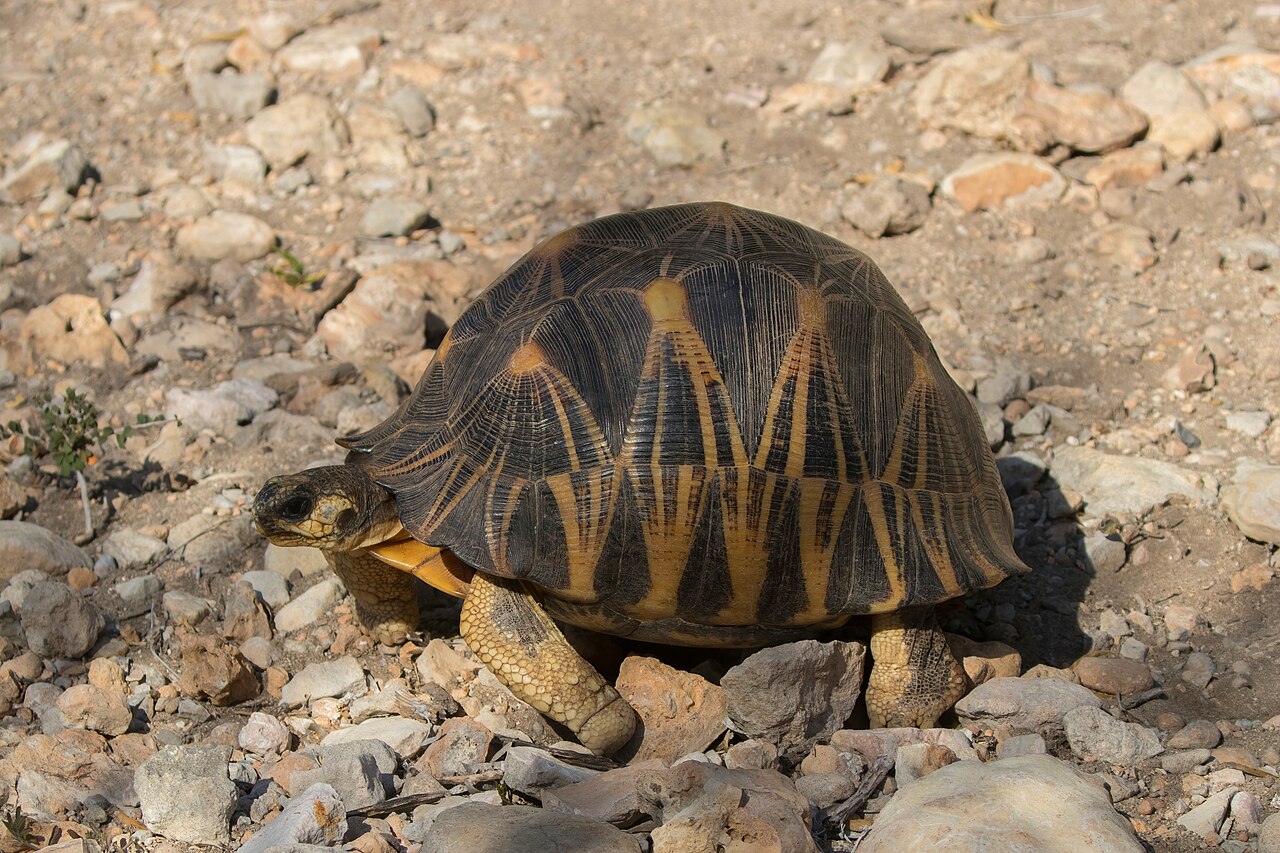
La Bhagavad Gītā (2.58) lo describe con una imagen muy clara: como una tortuga que recoge sus extremidades dentro de su caparazón. La tortuga no desaparece del mundo; solo se retira un momento hacia adentro.
The Bhagavad Gītā (2.58) describes it with a very clear image: like a turtle that draws its limbs into its shell. The turtle doesn't disappear from the world; it just withdraws inward for a moment.
Pasa algo parecido cuando te sumerges en el agua y los sonidos de afuera se apagan: sigues ahí, pero el mundo deja de jalarte. En el yoga, ese estado aparece en savasana —la postura de descanso con la que cierran casi todas las clases, acostado e inmóvil— cuando el cuerpo se queda quieto y los ruidos del lugar dejan de importar.
Something similar happens when you slip underwater and the sounds outside go quiet: you're still there, but the world stops pulling at you. In yoga, that state shows up in savasana —the resting posture that closes almost every class, lying down and still— when the body goes quiet and the noises of the room stop mattering.
La savia, la flor y el fruto: la mente (dhāraṇā, dhyāna y samādhi)The sap, the flower, and the fruit: the mind (dhāraṇā, dhyāna, and samādhi)
Las últimas tres ramas son una sola habilidad en tres profundidades.
The last three limbs are a single skill at three depths.
Dhāraṇā es sostener la atención en una sola cosa: la respiración, una vela, un mantra (Yoga Sūtras, 3.1). La atención se escapa y la traes de vuelta, una y otra vez. Eso es concentración: el regreso, no la perfección.
Dhāraṇā is holding your attention on one single thing: the breath, a candle, a mantra (Yoga Sūtras, 3.1). Your attention slips away and you bring it back, again and again. That's concentration: the return, not the perfection.
Dhyāna es cuando ese esfuerzo se vuelve continuo y ya no hay que sostenerlo: la atención fluye sola (Yoga Sūtras, 3.2). Piensa en cómo cae la miel cuando la sirves: no en gotas separadas, sino en un hilo continuo que no se corta. Así está la atención aquí — ya no son momentos de concentración uno tras otro, es un solo flujo. Eso es meditar.
Dhyāna is when that effort becomes continuous and you no longer have to hold it: the attention flows on its own (Yoga Sūtras, 3.2). Think of how honey falls when you pour it: not in separate drops, but in a continuous thread that never breaks. That's how attention is here — no longer moments of concentration one after another, but a single flow. That's meditation.
Samādhi es cuando la separación desaparece: ya no hay alguien observando algo, solo queda la experiencia (Yoga Sūtras, 3.3).
Samādhi is when the separation disappears: there's no longer someone watching something, only the experience remains (Yoga Sūtras, 3.3).
Swami Vivekananda, el primer maestro que llevó esta filosofía a Occidente, explica en Raja Yoga (1896) que estas tres juntas se llaman saṃyama, y que son el corazón del método: todo lo anterior existe para hacerlas posibles.
Swami Vivekananda, the first teacher to bring this philosophy to the West, explains in Raja Yoga (1896) that these three together are called saṃyama, and that they are the heart of the method: everything before exists to make them possible.
No es una escaleraIt isn't a staircase
Aunque están numeradas, las ocho ramas no son niveles que se van desbloqueando. T.K.V. Desikachar insiste en que se practican juntas y que el orden es un mapa, no una fila (El corazón del yoga, 1995).
Even though they're numbered, the eight limbs aren't levels you unlock one by one. T.K.V. Desikachar insists that they're practiced together and that the order is a map, not a line you wait in (The Heart of Yoga, 1995).
Las ramas se mezclan todo el tiempo. Por ejemplo: si en una postura empujas tu cuerpo hasta el dolor por querer llegar más lejos, estás haciendo āsana sin ahiṃsā (no dañar). El día que respetas tu límite y trabajas con tu cuerpo en lugar de contra él, ya estás practicando dos ramas a la vez. Lo mismo pasa con las demás: una exhalación larga ya es prāṇāyāma, y agradecer lo que hay hoy ya es santoṣa.
The limbs mix together all the time. For example: if in a posture you push your body into pain because you want to go further, you're doing āsana without ahiṃsā (not harming). The day you respect your limit and work with your body instead of against it, you're already practicing two limbs at once. The same goes for the rest: a long exhale is already prāṇāyāma, and being grateful for what's here today is already santoṣa.
El yoga funciona como un arte. En un cuadro, lo primero que ves son los colores y las figuras; pero quien lo pintó también decidió dónde poner la luz, qué dejar fuera, qué quería decir. Cuando alguien te explica eso, vuelves a mirar el mismo cuadro y ves más. Con el yoga pasa igual: las posturas son lo visible, y detrás hay ética, atención y entrega. Conocer el mapa completo no cambia la clase — te cambia a ti la forma de estar en ella.
Yoga works like art. In a painting, the first thing you see is the colors and the figures; but whoever painted it also decided where to put the light, what to leave out, what they wanted to say. When someone explains that to you, you look at the same painting again and you see more. It's the same with yoga: the postures are what's visible, and behind them there's ethics, attention, and surrender. Knowing the whole map doesn't change the class — it changes the way you're in it.
Para empezar hoyTo start today
Las ocho ramas en un díaThe eight limbs in a single day
Así se ven las ocho ramas en un día cualquiera:
This is what the eight limbs look like on any ordinary day:
- Al despertar, ordena tu espacio antes de salir — śauca.When you wake up, tidy your space before you head out — śauca.
- En tu práctica, busca que cada postura sea estable y cómoda, sin forzarte — āsana y ahiṃsā.In your practice, look for each posture to be steady and comfortable, without forcing — āsana and ahiṃsā.
- A la hora de comer, guarda el teléfono y come con todos los sentidos — pratyāhāra.At mealtime, put the phone away and eat with all your senses — pratyāhāra.
- En una conversación difícil, di la verdad con amabilidad — satya.In a hard conversation, tell the truth with kindness — satya.
- En la tarde, alarga tus exhalaciones durante tres minutos — prāṇāyāma.In the afternoon, lengthen your exhales for three minutes — prāṇāyāma.
- Suelta algo que ya no usas: ropa, un objeto, un pendiente viejo — aparigraha.Let go of something you no longer use: clothes, an object, an old loose end — aparigraha.
- Antes de dormir, quédate cinco minutos con la atención en una sola cosa — dhāraṇā.Before sleep, stay five minutes with your attention on one single thing — dhāraṇā.
- Y al cerrar el día, agradece algo que ya tienes — santoṣa.And as you close the day, be grateful for something you already have — santoṣa.
La meditación y la absorción no entran en la lista a propósito: llegan solas cuando lo demás está en su lugar. Se cultivan, no se persiguen.
Meditation and absorption aren't on the list on purpose: they arrive on their own when everything else is in place. They're cultivated, not chased.
Las posturas son la puerta por la que casi todos entramos al yoga. El mapa completo es lo que hace que valga la pena quedarse.
The postures are the door almost all of us walk through into yoga. The complete map is what makes it worth staying.
ReferenciasReferences
- Patañjali. Yoga Sūtras (siglos II–IV). Sūtras citados: 1.2, 2.29–2.32, 2.46, 2.49–2.53, 2.54, 3.1–3.3.
- Bryant, E. F. (2009). The Yoga Sūtras of Patañjali: A New Edition, Translation, and Commentary. North Point Press.
- Iyengar, B. K. S. (1988). The Tree of Yoga (El árbol del yoga). Shambhala.
- Iyengar, B. K. S. (1993). Light on the Yoga Sūtras of Patañjali. HarperCollins.
- Desikachar, T. K. V. (1995). The Heart of Yoga: Developing a Personal Practice. Inner Traditions.
- Adele, D. (2009). The Yamas & Niyamas: Exploring Yoga's Ethical Practice. On-Word Bound Books.
- Satchidananda, S. (1978). The Yoga Sutras of Patanjali. Integral Yoga Publications.
- Vivekananda, S. (1896). Raja Yoga. (Primera presentación sistemática de los Yoga Sūtras en Occidente.)
- Feuerstein, G. (1998). The Yoga Tradition: Its History, Literature, Philosophy and Practice. Hohm Press.
- Bhagavad Gītā, 2.58.
- Svātmārāma. Haṭha Yoga Pradīpikā (siglo XV), capítulos 1–2.
Créditos de imágenes: Manuscrito de los Yoga Sūtras: Wikimedia Commons, dominio público. Miniatura de padmāsana: manuscrito Jogapradīpikā (1830), British Library, dominio público, vía Wikimedia Commons. La ilustración del árbol del yoga (basada en la imagen descrita por B. K. S. Iyengar en El árbol del yoga, 1988) es propia. Fotografía de la tortuga: Charles J. Sharp, vía Wikimedia Commons (CC BY-SA 4.0).
Image credits: Yoga Sūtras manuscript: Wikimedia Commons, public domain. Padmāsana miniature: Jogapradīpikā manuscript (1830), British Library, public domain, via Wikimedia Commons. The illustration of the tree of yoga (based on the image described by B. K. S. Iyengar in The Tree of Yoga, 1988) is my own. Turtle photograph: Charles J. Sharp, via Wikimedia Commons (CC BY-SA 4.0).