Dentro de ti hay un tejido que envuelve cada músculo, cada hueso y cada órgano, como una malla continua que va de los pies a la cabeza: la fascia. Es la que guarda la tensión que ni sabías que traías, y la que hace que un nudo en un lugar se sienta en otro. La liberación miofascial es la técnica de soltar esa red: con pelotas de masaje y el peso de tu propio cuerpo, presionas y ruedas las zonas cargadas hasta que aflojan. De la fascia escribí un artículo entero: todo está conectado.
Inside you there is a tissue that wraps every muscle, every bone and every organ, like a continuous mesh running from your feet to your head: the fascia. It’s what stores the tension you didn’t even know you carried, and what makes a knot in one place be felt in another. Myofascial release is the technique of loosening that net: with massage balls and the weight of your own body, you press and roll the loaded zones until they let go. I wrote a whole article about fascia: everything is connected.
De dónde viene
Where it comes from
El trabajo sobre la fascia viene de las terapias manuales; lo nuevo fue darle la herramienta al practicante. Métodos como Yoga Tune Up, de la maestra Jill Miller, juntaron el automasaje con pelotas y la respiración del yoga en formato de clase: aprendes a darte el masaje tú, con una pelota, el suelo y tu peso. Esa es la versión que enseño. Y la ciencia alcanzó a la práctica: hoy se sabe que la fascia está viva, responde a la presión, y que rodar la planta del pie un par de minutos afloja toda la cadena de atrás del cuerpo. Mueves una pieza y se mueve toda la red.
Work on the fascia comes from manual therapies; what was new was handing the tool to the practitioner. Methods like Yoga Tune Up, by the teacher Jill Miller, brought together ball self-massage and the breath of yoga in class format: you learn to give yourself the massage, with a ball, the floor and your own weight. That’s the version I teach. And science caught up with the practice: today we know the fascia is alive, responds to pressure, and that rolling the sole of your foot for a couple of minutes loosens the whole back chain of the body. You move one piece and the whole net moves.
Cómo es una clase típica
What a typical class is like
No se parece a una clase de yoga tradicional: casi todo pasa en el suelo, despacio, con una pelota como herramienta principal:
It doesn’t look like a traditional yoga class: almost everything happens on the floor, slowly, with a ball as the main tool:
- 1Llegar y medir — empezamos quietos, sintiendo cómo está hoy el cuerpo. Esa referencia inicial importa, porque al final vas a comparar.
- 1Arrive and measure — we start still, feeling how the body is today. That initial reference matters, because at the end you are going to compare.
- 2Una zona a la vez — cada clase se enfoca en una o dos: los pies, las pantorrillas, los muslos, las caderas y los glúteos, la espalda baja o la alta, los hombros y el pecho, las manos y los antebrazos, el cuello y la mandíbula.
- 2One zone at a time — each class focuses on one or two: the feet, the calves, the thighs, the hips and glutes, the lower or upper back, the shoulders and chest, the hands and forearms, the neck and jaw.
- 3Rodar y sostener — pones la pelota entre tu cuerpo y el suelo y te mueves lento sobre ella. Cuando encuentras un punto sensible, te quedas ahí respirando: la fascia no suelta con golpes, suelta con tiempo y presión sostenida.
- 3Roll and hold — you place the ball between your body and the floor and move slowly over it. When you find a tender point, you stay there breathing: fascia doesn’t release with blows, it releases with time and sustained pressure.
- 4Comparar — se trabaja primero un lado y luego se hace pausa para sentir la diferencia. Ahí se nota el efecto: un lado se siente más largo y suelto, y el otro sigue como llegaste.
- 4Compare — you work one side first and then pause to feel the difference. That is where the effect shows: one side feels longer and looser, and the other is still the way you arrived.
- 5Cerrar — varios minutos de descanso boca arriba, para que el cuerpo asiente lo que soltó.
- 5Close — several minutes of rest on your back, so the body settles what it released.
Qué se siente
What it feels like
Cuando la pelota encuentra un nudo, duele, pero es un dolor que alivia, como el de un buen masaje. La regla siempre es la misma: si puedes respirar tranquilo mientras presionas, vas bien; si aprietas los dientes, es demasiado.
When the ball finds a knot, it hurts, but it is a pain that relieves, like the one from a good massage. The rule is always the same: if you can breathe calmly while you press, you are fine; if you are gritting your teeth, it’s too much.
Al quitar la presión, la zona trabajada se siente caliente, despierta, con espacio. La fascia es en gran parte agua y funciona como esponja: la presión la exprime y al soltar se vuelve a empapar. Y a veces, al soltar una zona que llevaba años apretada, se suelta también algo emocional: un suspiro enorme, unas ganas de llorar sin razón. Es normal, y es buena señal.
When you release the pressure, the worked zone feels warm, awake, spacious. Fascia is largely water and works like a sponge: pressure wrings it out and, when you release, it soaks up again. And sometimes, releasing a zone that spent years clenched also releases something emotional: a huge sigh, an urge to cry for no reason. It’s normal, and it’s a good sign.
Para quién es (y para quién no tanto)
Who it’s for (and who it’s not so much for)
Para casi todos, y especialmente para quien nunca ha pisado una clase de yoga: si puedes acostarte en el suelo, puedes hacer esto. Es la clase para quien pasa el día sentado frente a una pantalla, para quien entrena duro y amanece con el cuerpo rígido, y para quien cree que estirar "no es lo suyo": aquí sueltas.
For almost everyone, and especially for anyone who has never set foot in a yoga class: if you can lie down on the floor, you can do this. It’s the class for anyone who spends the day sitting in front of a screen, for anyone who trains hard and wakes up with a stiff body, and for anyone who thinks stretching "isn’t their thing": here you release.
¿Para quién no tanto? Si lo que buscas es sudar y moverte, esta no es esa clase. Y hay casos donde conviene preguntar antes: lesiones recientes, zonas inflamadas, osteoporosis avanzada o embarazo —se puede practicar, pero con ajustes—.
Who is it not so much for? If what you want is to sweat and move, this isn’t that class. And there are cases where it’s worth asking first: recent injuries, inflamed zones, advanced osteoporosis or pregnancy —you can practice, but with adjustments—.
Mitos y miedos comunes
Common myths and fears
"Entre más duela, mejor." No: el dolor extremo hace que el cuerpo se defienda y apriete más. La presión correcta es la que te deja respirar hondo. Menos es más, casi siempre.
"The more it hurts, the better." No: extreme pain makes the body defend itself and clench harder. The right pressure is the one that still lets you breathe deep. Less is more, almost always.
"La pelota rompe los nudos." No se rompe nada, y qué bueno: la presión sostenida le avisa al sistema nervioso que puede dejar de defender esa zona, y mueve agua dentro del tejido. No se trata de machacar el tejido, sino de darle tiempo a que suelte.
"The ball breaks up the knots." Nothing gets broken, thankfully: sustained pressure tells the nervous system it can stop defending that zone, and moves water within the tissue. The point is not to grind the tissue, but to give it time to let go.
"Eso es para deportistas." La tensión fascial no viene solo de entrenar: viene de estar ocho horas sentado, de dormir chueco, del estrés. Si tienes cuerpo y vida, tienes material para esta clase.
"That’s for athletes." Fascial tension doesn’t come only from training: it comes from sitting for eight hours, sleeping crooked, stress. If you have a body and a life, you have material for this class.
"Con estirar es suficiente." Estirar ayuda, pero no llega a los puntos densos: un nudo estirado sigue siendo un nudo, nada más que tenso. Por eso las dos cosas se complementan tan bien.
"Stretching is enough." Stretching helps, but it doesn’t reach the dense points: a stretched knot is still a knot, only tenser. That’s why the two complement each other so well.
Para tu primera clase
For your first class
Ven con ropa cómoda y sin nada que estorbe entre tu cuerpo y el suelo. Las pelotas normalmente las presta el estudio. Ya en clase, dos reglas te cuidan: nunca pongas la pelota directo sobre hueso —siempre sobre lo carnoso— y nunca presiones hasta el punto de no poder respirar tranquilo. De lo demás se encarga el maestro.
Come in comfortable clothes, with nothing in the way between your body and the floor. The balls are usually lent by the studio. In class, two rules keep you safe: never place the ball directly on bone —always on the fleshy parts— and never press to the point where you can’t breathe calmly. The teacher takes care of the rest.
Y si quieres probar algo hoy mismo: pon una pelota bajo la planta de tu pie y ruédala despacio un par de minutos —en el artículo de las rodillas cuento cómo—. Luego compara ese pie con el otro. Con eso vas a entender de qué va todo esto.
And if you want to try something today: put a ball under the sole of your foot and roll it slowly for a couple of minutes —in the article about knees I explain how—. Then compare that foot with the other one. That will show you what this is all about.
Para practicar en casaTo practice at home
Pelotas de masaje
Massage balls
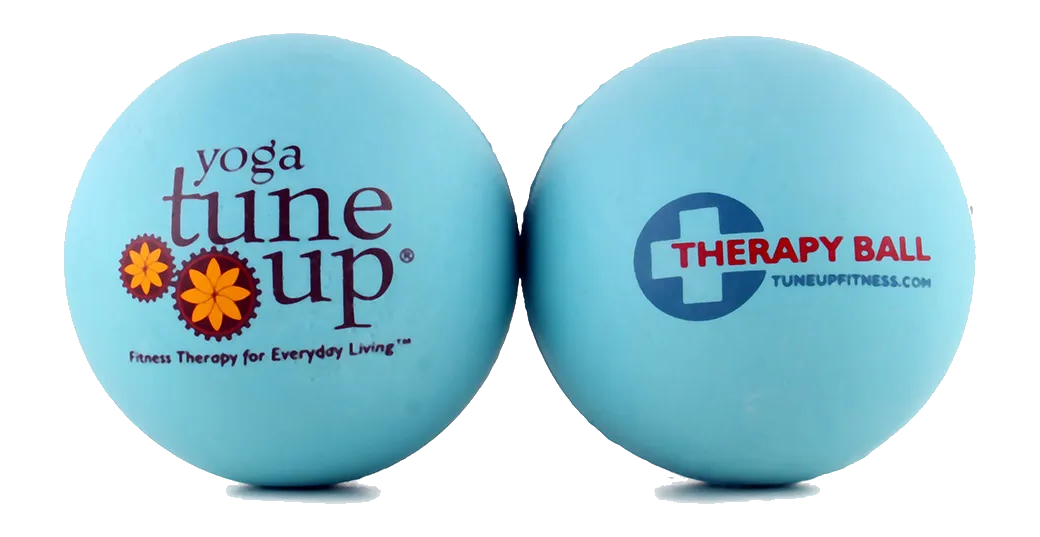
Las pelotas Yoga Tune Up que uso en clase, con su bolsa. Para llevar la liberación miofascial a tu casa.
The Yoga Tune Up balls I use in class, with their bag. To bring myofascial release home.
Comprar en la tiendaBuy in the shop